MENOPAUSE CLINIC IN GLASGOW
At GP Matters we take a holistic approach to menopause care, offering personalised advice and support on treatment options such as HRT, non-hormonal therapies, and lifestyle changes. Our aim is to ensure that women receive appropriate medical advice and assistance, enabling effective management of menopause and fostering well-being throughout this transitional phase.
Your initial appointment lasts around 30 minutes. During this time, you’ll discuss your symptoms and how they’re affecting your daily life. Our doctor will then discuss options with you and together you will arrange a plan that suits you. This may include hormone replacement therapy (HRT), other medications, lifestyle changes, or a combination of these.
Private GP
Choosing the right treatment for you
Initial appointment (30 min) - £TBC
Blood tests, if required, will incur an additional fee
Hormone replacement therapy (HRT) is a treatment used to help menopause symptoms. It replaces the hormones oestrogen and progesterone, which fall to low levels as you approach the menopause.
Menopause symptoms HRT can help to treat include:
* hot flushes
* night sweats
* sleep problems
* mood swings
* anxiety and low mood
* vaginal dryness
Menopause is when your periods stop due to diminishing hormone levels. It usually affects women between the ages of 45 and 55 but it can happen earlier. It affects anyone who has periods. The symptoms of menopause can begin years earlier during perimenopause as hormones, particularly oestrogen, gradually decline.
Oestrogen and progesterone are an important part of period cycles, ovulation and pregnancy. They also keep your bones healthy and offer some protection against cardiovascular disease. As you get older, the loss of these hormones can have a big effect on your body.
To replace these hormones, you'll usually take a combination of oestrogen and progestogen. If you've had a hysterectomy to remove your womb you can take oestrogen on its own.
Find out more about menopause
Who can take HRT
You can usually take HRT if you're having menopause symptoms.
But HRT may not be suitable if you:
* have a history of breast cancer, ovarian cancer or womb cancer
* have a history of blood clots – you may need to use patches or gels rather than tablets
* have untreated high blood pressure – your blood pressure will need to be controlled before you can start HRT
* have liver disease
* are pregnant – it's still possible to get pregnant while taking HRT, so it's important to use contraception until 2 years after your last period if you're under 50, or for 1 year after the age of 50
If any of these apply to you, alternatives to HRT may be recommended instead..
It may be difficult to know when to start HRT, how long to take it for and when to stop it. You may also want to know if you can take it while using contraception.
Find out more about when to take HRT
You'll usually start with a low dose, which may be increased later. Your symptoms should improve after a few days or weeks.
Our GP will usually recommend a review appointment 3 months after you start taking HRT, or if you change your type of HRT. This is to see how well it's working. If everything is OK, you'll usually have 1 review a year.
If your symptoms do not improve or you get side effects, a GP may suggest either:
* changing your dose
* changing the type of HRT you're taking
* referring you to a menopause specialist doctor.
You'll usually need to take HRT for 2 to 5 years, but it can be longer in some cases.
Benefits of HRT
The main benefit of HRT is that it can help relieve most menopause and perimenopause symptoms, including hot flushes, brain fog, joint pains, mood swings and vaginal dryness.
Hot flushes or night sweats often improve within a few weeks. Other symptoms like mood changes and vaginal dryness can take a few months to improve.
Taking HRT can also reduce your risk of hormone-related health problems including osteoporosis and heart disease.
Risks of HRT
The risks of HRT are small and usually outweighed by the benefits.
Source: NHS
There's no fixed limit on how long you can take HRT, but talk to a GP for advice. You'll usually have a review of your treatment every year.
It's best to only take HRT for as long as the benefits outweigh the risks. This depends on your symptoms, your age and any risk factors you have.
Vaginal oestrogen does not have the same risks as other types of HRT, so you can keep taking it for as long as you need it to control vaginal dryness.
Source: NHS
Talk to our GP if you're thinking about stopping HRT.
If your menopause symptoms return when you try stopping, and you decide that the benefits of HRT for your symptoms still outweigh the risks, you can keep taking HRT for longer.
What happens when you stop taking HRT
When you decide to stop taking HRT, you can choose to stop suddenly, but it's usually recommended to reduce your dose gradually over 3 to 6 months.
You may find that symptoms come back for a short time when you stop taking it. This is less likely to happen if you reduce your dose gradually.
If your symptoms come back and do not go away after 3 months, speak to a GP, who may suggest other treatments or restarting a low dose of HRT.
Source: NHS
Menopause is when a woman stops having periods. Menopause means ‘the last menstrual period’. It’s not only those who identify as women who will experience menopause. Some transgender men, non-binary people and intersex people or people with variations in sex characteristics may also experience menopause.
Menopause is a natural event and transition that women experience, however, the timing and symptoms are different for everyone. You can look at your family history to get an idea of when you might go through it. It’s likely to be a similar age to when your mother or older sisters started theirs.
Menopause can also occur due to certain surgeries or cancer treatments. This can sometimes cause symptoms to be more sudden and in some cases more severe.
Perimenopause is the time from the start of menopausal symptoms until after a woman has experienced her last period. Periods will usually start to become less frequent over a few months or years before they stop altogether. They might be more irregular and become heavier or lighter. For some women, they can stop suddenly.
Postmenopause is the time after a woman experiences her last period. A woman is said to be postmenopausal when she has not had a period for 12 months.
Perimenopause and menopause are a natural part of a woman’s life course and usually occur between the ages 45 and 55 years of age, as a woman’s oestrogen levels drop (although it can start earlier). In the UK, the average age for a woman to reach menopause is 51.
Life doesn’t have to be put on hold because of menopause. There’s a lot that can be done to help manage symptoms, including making healthy lifestyle choices, trying different treatments and seeking support from healthcare professionals.
Most women will experience menopausal symptoms. Some women will experience few, or no, symptoms. But for some, they can be quite severe and have a significant impact on everyday life.
The first sign of menopause can be change in the normal pattern of your periods. You may start having either unusually light or heavy periods.
The frequency of periods may also be affected. They may occur every two or three weeks, or they might not occur for months at a time. Eventually, periods will stop altogether, although for some women other menopause symptoms may continue.
Some women can start experiencing symptoms such as migraines, irritability and low mood especially around the period time, without seeing irregularity in periods.
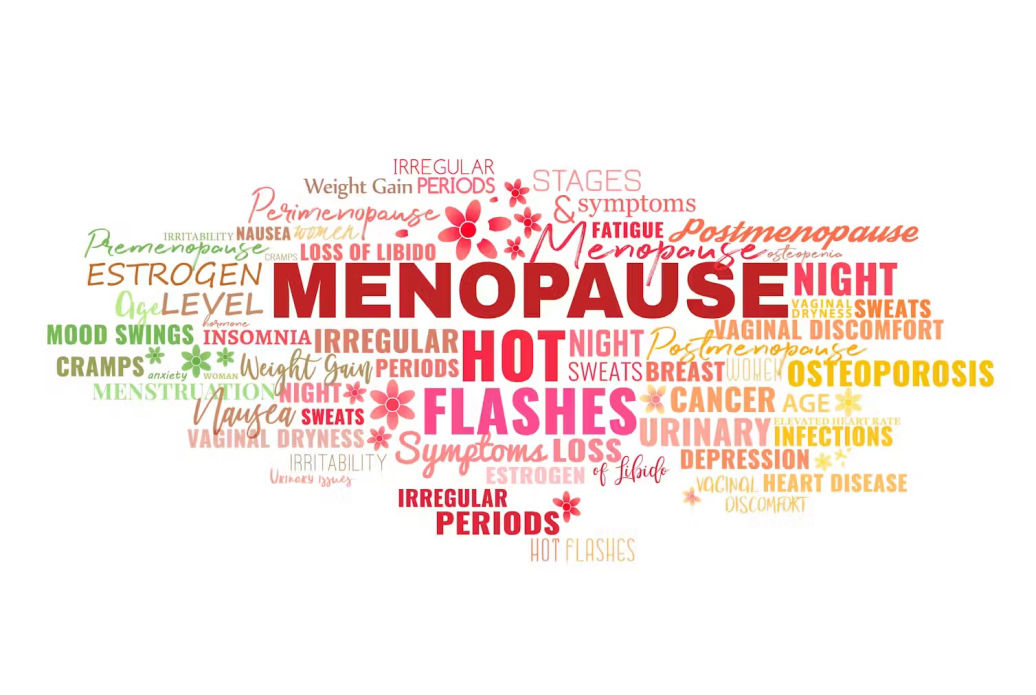
There are many menopausal symptoms and symptoms can differ between individuals. Some of the most common symptoms include:
‘brain fog’ and memory issues
difficulty sleeping
fatigue
hot flushes
joint aches
loss of sex drive (libido)
low mood or anxiety
migraine
night sweats
vaginal dryness or pain
Source: NHS
Menopause is caused by a change in the balance of the body’s hormones, which occurs as you get older. Premature or early menopause can occur at any age but is defined as menopause under the age of 45years. If a woman experiences a menopause before the age of 40years this is seen at premature ovarian insufficiency.
Menopause happens when the ovaries stop producing as much of the hormone oestrogen and no longer release an egg each month.
Menopause can also occur when a woman’s ovaries are affected by certain treatments such as chemotherapy or radiotherapy, or when the ovaries are removed, often at the time of a hysterectomy.
Further information about early and premature menopause
Source: NHS
It’s important to get healthcare advice around menopause treatments so that you can make the decisions that are best for you.
If you or someone you know does need help to manage symptoms, support can be accessed through your GP practice.
Your healthcare professional can talk to you about treatments and work with you to explore lifestyle changes if you have menopausal symptoms that you feel are interfering with your day-to-day life. These include:
hormone replacement therapy (HRT)
vaginal oestrogen preparations, lubricants or moisturisers for vaginal dryness
cognitive behavioural therapy (CBT)
eating a healthy, balanced diet and exercising regularly
taking supplements such as vitamin B6 and vitamin D
Further information about treating the symptoms of menopause.
Source: NHS
Menopausal symptoms can sometimes be severe and they could impact day-to-day life. There is help available if you need it.
Mental wellbeing
Menopause can have an effect on your mental health and wellbeing. Some of the symptoms might include irritability, depression and anxiety. Lack of sleep caused by menopause can also have an impact on a person’s mood and how they feel.
If you or someone you know is suffering from any of these symptoms and it’s having an impact on day-to-day life, discuss it with someone from your local GP practice and they can help you get the support you need.
Workplace
Some people find it hard to manage menopause symptoms at work. It’s important to remember that the menopause is a normal time in women’s lives and that support should be available to help you feel comfortable at work.
Sex and relationships
Menopause symptoms such as vaginal dryness or pain, reduced sex drive or discomfort during penetrative sex might have an impact on your sex life and relationships.
There are treatment options available that might help ease or manage some of these symptoms. It might also be helpful to discuss how menopause is affecting you with your partner. By helping them have an understanding of what you’re experiencing, they’ll be more aware of how they can support you.
Supporting someone through menopause
If you know someone around you is going through menopause, you can let them know that you’re there to support them. Ask them what you can do to help, or just ask them how they’re feeling. People might not always feel comfortable discussing all of their symptoms, but it’s still important to let them know you’re there for them.
Source: NHS